



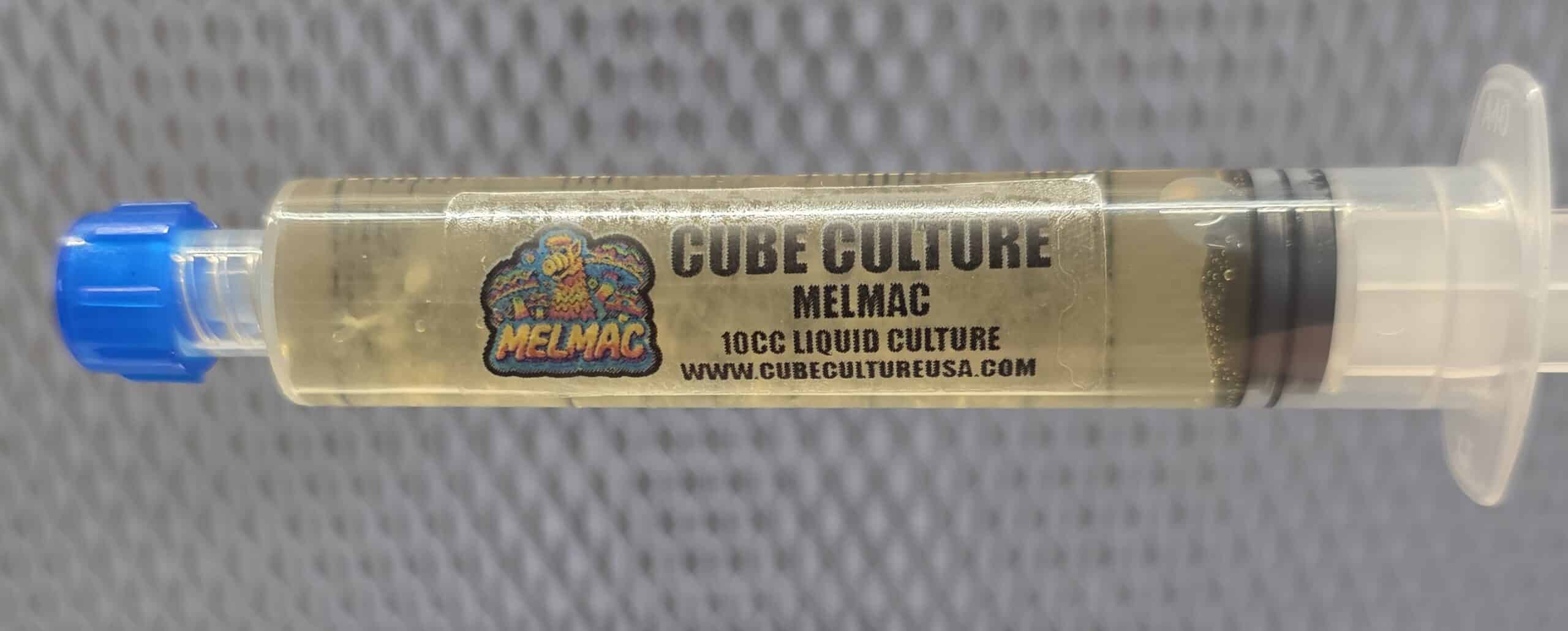
Melmac | PE-Family P. cubensis Genetics
The Homestead variant known for dense, “squat” PE morphology.
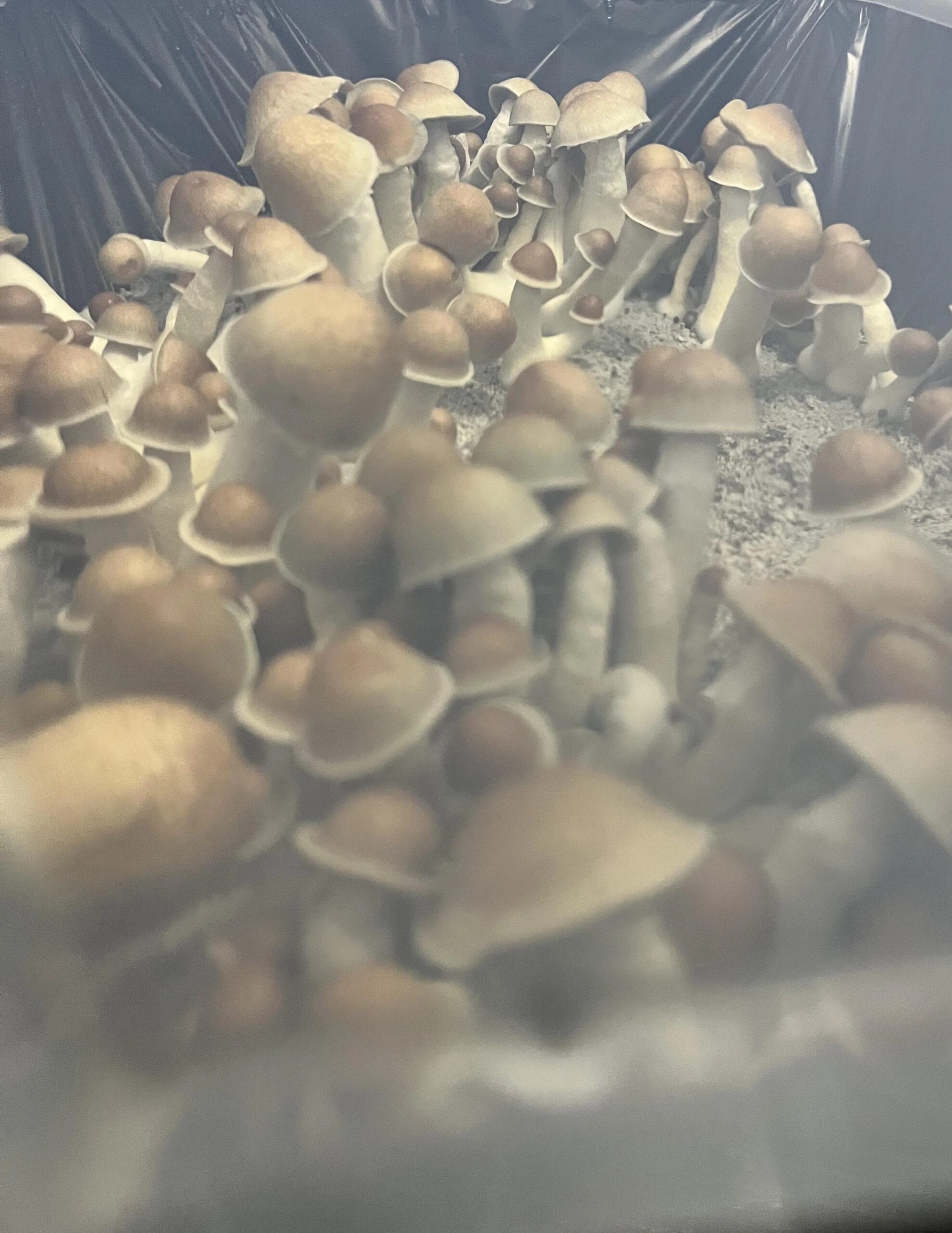
Melmac is a celebrated Psilocybe cubensis cultivar associated with the Penis Envy (PE) family tree, often referenced as the “Homestead” variation. In collector and research circles, Melmac is recognized for its compact, heavy-bodied fruits, thick stipes, and PE‑style cap development that frequently remains more closed/bulbous than many classic cubensis lines.
Genetic Lineage & Historical Context
- Species: Psilocybe cubensis
- Lineage status: PE-family / domesticated cultivar (derived from the Penis Envy lineage)
- Common aliases: Homestead Penis Envy, Melmac PE (naming varies by vendor/library)
In published field and identification literature, “cultivar” names within P. cubensis are frequently applied for marketing and can vary between sources; however, Penis Envy and its derived lines (including Melmac) are widely referenced as notable domesticated cultivars with distinct traits.
Visual Characteristics (Macro Morphology)
- Cap development: PE-style bulbous/underdeveloped caps are commonly reported, sometimes remaining partially closed
- Stem (stipe): Thick, dense, and substantial compared to many “classic” cubensis varieties
- Overall build: Compact / “squat” proportions are frequently noted within Melmac-derived phenotypes
- Coloration: Typically golden-brown caps and pale stipes, consistent with PE-family presentations
- Bruising: Blue oxidation upon handling or damage (a common characteristic across psilocybin-containing Psilocybe)
Microscopy & Taxonomy Notes
- Spore print color (species-typical): Dark purplish-brown (typical of P. cubensis)
- Gill attachment (species-typical): Adnate to adnexed attachment is commonly described for P. cubensis
- PE-family note: Many PE lineages are reported to produce fewer spores (sometimes described as “nearly sterile”), which is one reason PE‑family genetics are often preserved through isolation work rather than spore-based selection
Research Notes (Educational Context)
Educational and descriptive context only.
- Potency (reported): Above-average is commonly reported in anecdotal literature for PE-derived lines; reports vary by genetics, storage, and sampling
- Analytical relevance: Often discussed alongside other PE-derived cultivars in conversations about domestication, inbreeding, and cultivar reputation
- Important myth-busting: Reported “strain-specific” effects are strongly influenced by set/setting, expectations, and dosage; cultivar names are not a reliable predictor of subjective outcomes
Cultivation Characteristics (High-Level Overview)
- General behavior (reported): PE-family genetics are often described as producing dense tissue and distinctive morphology
- Stability: Long-term selective isolation is frequently cited as a reason Melmac lines can remain visually consistent
For safety and compliance, this section is descriptive only and excludes instructions, parameters, or cultivation techniques.
Collector & Researcher Highlights
- PE lineage branch: Commonly referenced as the “Homestead” variation in the PE family tree
- Distinct morphology: Compact, thick-stemmed fruits and PE-style cap development are key identifiers for comparative study
- Abbreviation: Often cataloged as Melmac or MM (library naming varies)
Why liquid culture over spores (for research):
- Established genetics: derived from a preserved, domesticated PE-family lineage
- Cleaner observation: minimal extraneous material for microscopy prep – Made in front of a scanned, 99.99% efficient HEPA filter
- Reliable morphology: ideal for repeated comparative study
- Shelf Life: Use within 2 months for best results; 70-day viability guarantee when stored properly; may remain viable up to 12 months refrigerated (not guaranteed). DO NOT FREEZE.
Shipping: Fast and Free USPS shipping including all territories including Puerto Rico, U.S. Virgin Islands, Guam, Northern Mariana Islands, and American Samoa. Expedited USPS Priority options available. Products shipped daily (see our Shipping FAQ page for shipping times and questions) No cheap culture and outrageous shipping cost. What you see is what you pay.
- Satisfaction guarantee on all orders
- Military & First Responder discount available
- Shroomery verified & trusted vendor with 100,000+ cultures shipped
- See what our customers say about us!
- All payment methods are accepted, including cash, money order, debit, credit, cryptocurrency at checkout, Cash App, and Venmo.
Important: Products are strictly intended for microscopy and taxonomy research only. Do not use where prohibited by law. None of our products contain any illegal or active alkaloids at the time of shipment.
Add Melmac to your genetic library for close study of PE-family morphology and domesticated P. cubensis variation.
Melmac Descendants & PE-Family Lines We Carry
Few lines have been used as a parent as often as Melmac. Several of the modern hybrids we carry trace part of their ancestry directly to it:
- Penis Envy (PE) – the family root, and the most direct comparison for how far the Homestead selection has drifted from its source
- True Albino Melmac (TAM) – an albino line linked to Melmac and True Albino Teacher genetics
- Albino Bluey Vuitton (ABV) – the albino selection from Bluey Vuitton, a Panama × Melmac cross
- Lucid Gates – an albino from the Pearly Gates line, built from True Albino Teacher and two rounds of Melmac genetics
Collecting the family? Add the matching Melmac vinyl sticker – and every order includes a free random sticker regardless.
Frequently Asked Questions
Is Melmac the same thing as Penis Envy?
Melmac sits within the Penis Envy family and is frequently referenced as the “Homestead” variation of that lineage, but it is cataloged as its own distinct line. It shares PE-family traits such as thick stipes and compact cap development.
Why is Melmac described as “squat”?
Melmac-derived phenotypes are commonly noted for compact, heavy-bodied proportions — short relative to their mass, with thick stems and bulbous caps that often remain partially closed. That combination is what collectors mean by the squat description.
What is the difference between a liquid culture and a spore syringe?
A spore syringe carries spores suspended in solution. Spores are genetically varied and have to germinate before any mycelium exists, so what develops can differ from sample to sample. A liquid culture contains living mycelium from a single isolated genetic line that has already been grown out, so you are working with a known, consistent expression from the start and there is no germination stage. For microscopy and taxonomy work that means repeatable observation of the same genetics rather than a mixed population. Every culture we prepare is made in front of a scanned, 99.99% efficient HEPA filter.
How long will my liquid culture stay viable, and how should I store it?
We recommend using your culture within 2 months of receipt for best results. When stored properly it is covered by our 70-day viability guarantee, and properly stored cultures can remain viable for up to 12 months, although viability beyond 70 days is not guaranteed. Keep it refrigerated between 33-40°F and never allow it to freeze. Most cultures survive a single freeze-thaw cycle, but repeated freeze-thaw cycles will kill live mycelium.
What happens if my culture arrives contaminated or does not work?
Every batch is verified contamination-free before it ships, and your order is covered by our 70-Day Guarantee. If a culture arrives contaminated or fails to perform within that window, contact us and we will arrange a replacement or refund. Full terms are set out on our Refund & Replacement Policy page.
Where does the Melmac name come from?
Melmac is widely reported to be named after the fictional home planet of ALF, the alien in the 1980s television sitcom of the same name, which fits the era in which the line first circulated. The Homestead name refers to the company credited with selecting and distributing it.
Which modern strains descend from Melmac?
Melmac has become one of the most widely used parents in modern breeding. Lines reported to carry Melmac genetics include Bluey Vuitton (Panama × Melmac), its albino selection ABV, Pearly Gates and its descendants Emerald Gates and Lucid Gates, MVP and AMVP, and True Albino Melmac. Some pedigrees for Makilla Gorilla also name Melmac as a parent.
What do Melmac spores look like under the microscope?
Typical of the species: smooth, subellipsoid, dark purple-brown in transmitted light, with a truncate germ pore, and roughly 11 to 17 micrometers long by 7 to 12 wide. Melmac is generally described as sporulating more than standard Penis Envy, though still less than open-capped classics like Golden Teacher, so prints can be modest.
Have a question we have not covered here? See our full FAQ page.
Additional Information & Research Resources
Documented Origin & Disputed History
Melmac belongs to the oldest branch of the Penis Envy story. The PE line itself is traced to Amazonian material associated with Terence McKenna in the 1970s, with its modern form credited to the grower known as Rich Gee; Hamilton Morris’s 2022 long-form investigation set out that history in detail. Melmac is widely described as a selection from those PE genetics made in the 1980s by a company called Homestead, which sold spore prints through that decade before disappearing. The name is generally said to come from ALF’s home planet in the 1980s sitcom.
Some collectors believe Melmac is closer to the original PE genetics than many of the PE lines sold today, because it was selected and preserved early. That claim is plausible but has not been tested genetically. As with most PE-family history, the details come from community accounts rather than documentation, and we present them as reported.
What the Peer-Reviewed Genetics Show
The PE family is one of the best-studied groups of cultivars. McTaggart and colleagues, writing in Current Biology in 2023, identified a distinct P-envy population with the strongest signal of clonal propagation of any group in the study (an index of association of 0.771), the highest inbreeding coefficient (FIS of 0.811), only 2 HD and 5 PR mating-type alleles, and evidence of sibling relationships consistent with descent from a single parent mushroom. It clustered on a separate branch from Golden Teacher and its relatives.
A 2021 draft reference genome published in F1000Research by McKernan and colleagues was assembled from a PE-family strain. It came to about 46.6 megabases and revealed a large insertion of roughly 4.6 kilobases in one of the genes of the psilocybin pathway, a structural difference the authors suggested could be relevant to the family’s reported potency. That idea has not yet been confirmed experimentally.
In plain language: Melmac comes from one of the narrowest and most distinctive genetic lines in cultivation. That consistency is exactly why breeders keep using it as a parent: crossing Melmac into another line reliably adds thick stems, dense tissue and compact caps.
Melmac as a Parent Line
Melmac’s biggest influence has been on modern breeding. It appears in the reported pedigrees of Bluey Vuitton and its albino ABV, of Pearly Gates, Emerald Gates and Lucid Gates, of MVP and AMVP, and of True Albino Melmac, and one pedigree for Makilla Gorilla names it too. Running Melmac beside any of these is the most direct way to document which traits it contributed.
What Analytical Testing Shows
There is no published laboratory data on Melmac itself. The closest peer-reviewed reference point is a 2026 study in the Journal of Fungi by Sharchaton and colleagues, which grew 14 cubensis strains under identical conditions. Penis Envy measured 17.59 mg/g total tryptamines, second highest of all strains tested, with the highest psilocin of any strain at 1.77 mg/g. Totals across the study ranged more than 7.8-fold, from 2.62 to 20.65 mg/g. PE-family ancestry is associated with higher readings, but Melmac-specific claims should be treated as unverified until the line itself is tested.
Microscopy Reference Data
- Spore dimensions: within the normal P. cubensis range of roughly 11–17 x 7–12 micrometers; published Melmac-specific measurements are not available
- Shape: subellipsoid, smooth-walled, no surface ornamentation
- Germ pore: truncate at the apical end, resolvable at 1000x oil immersion
- Pigmentation: dark purple-brown under transmitted light; prints generally heavier than standard PE but lighter than open-capped classics
- Macro reference: medium to large, dense fruiting bodies; thick, often contorted stems; golden-brown caps that stay bulbous and slow to open, frequently wavy or split at the margin; blue bruising where handled
- Suggested workflow: 100x to confirm coverage, 400x for primary morphological observation, 1000x oil immersion for measurement and germ pore detail; run beside Penis Envy to compare the two PE-family lines directly
Melmac on Video
Background viewing from third-party creators. Melmac coverage first, then the history of the PE family and one of its descendants:
- Melmac Mushrooms: What Are They? – DoubleBlind, 10 min. The most thorough overview of the line, its Homestead origin and how it compares with standard Penis Envy.
- The True Story of the Penis Envy Mushroom – Hamilton Morris, 2 hr 45 min. A long-form 2022 interview on the origin of the PE line that Melmac was selected from.
- Penis Envy Mushrooms – DoubleBlind, 7 min. An introduction to the PE family and why PE-type mushrooms look and behave differently.
- Penis Envy Mushrooms: The World’s Strongest Psychedelic Mushroom? – Third Wave, 6 min. Background on the PE family and its place among the best-known cubensis varieties.
- Magic Hour! Albino Bluey Vuitton – Shroom Bloom, 1 min. A time-lapse of ABV, one of the modern albino lines with Melmac in its pedigree.
- Fungal Microscopy: How to Mount a Slide, View and Measure Spores – Oregon Mycological Society, 5 min. Not strain-specific, but the most useful video here if you are doing the measurement work yourself.
These are third-party videos. We are not affiliated with any of these creators and do not control their content. Links are provided for historical and educational context only.
Important Notice:
Once home, cubensis cultures should be kept in a fridge between 33-40°F to maximize their lifespan. We recommend using them within 2 months. Viability is guaranteed for 70 days when stored properly, and properly stored cultures can last up to 12 months, but this is not guaranteed.
Do not let your cultures freeze! While most will survive one freeze-thaw cycle, multiple freeze-thaw cycles will kill any live mycelium.
This product description is provided strictly for educational, historical, and scientific context. Products are intended for microscopy and taxonomy research only. Not for cultivation or consumption.
We are not able to offer any cultivation or growing information or advice. Any such requests will be ignored.
Please comply with all applicable local, state, and federal laws.


Darrin Mccoy (verified owner) –
Not sure I got a bad lc and can’t get a reply from the company. The first beginner pack I got was legit but the last few orders have came w issues and I email them and i don’t get Any answers. They did address me once saying they would replace it and just never got back to me. Now I’m editing this and still no response! Crazy customer service it’s no way they’re to busy to shoot me a Email
Anonymous (verified owner) –
Really didnt look like the picture at all. But still fruited well.
shawn s. (verified owner) –
Always a great no contam lc very nice thanks to yall at cube culture USA ss
Tony (verified owner) –
Looks good !
I’ll know more in a few days!
shawn s. (verified owner) –
Cube culture, it’s isolates are the best, no contamination, ,I’ve grown to pick my culture from you guys each time I order culture’s, thank you for the consistency and such great isolates, I recommend you to all my friends, talk soon…thanks again shawn S…
Anonymous (verified owner) –
Fast shipping
shawn s. (verified owner) –
Great job guys as allways I’m thankful to cube culture for all the great work….thanks shawn.
Michael B. (verified owner) –
Fast delivery
Anonymous (verified owner) –
Had a good experience with the last purchase hoping this one will be the same
Robert D. (verified owner) –
Service was fast and communication was great
Kyle K. (verified owner) –
Fast shipping
Ed T. (verified owner) –
Thank you very much for a great culture with best service. From the people at cubecultureusa.com thanks…
Anonymous (verified owner) –
Quality product. A personal favorite specimen to observe under a microscope. Product was received in a timely manner and showed no signs of bacteria when observed under sterile conditions. Do not expect to receive fast results with this specimen, but patience is a virtue that is oft rewarded, especially with this one.
I would highly recommend this specimen for all microscopy enthusiasts.