




Enigma | The Legendary TW2 “Blob” Mutation (P. cubensis)
Brain-coral morphology. Culture-only genetics. A true outlier in the cubensis library.
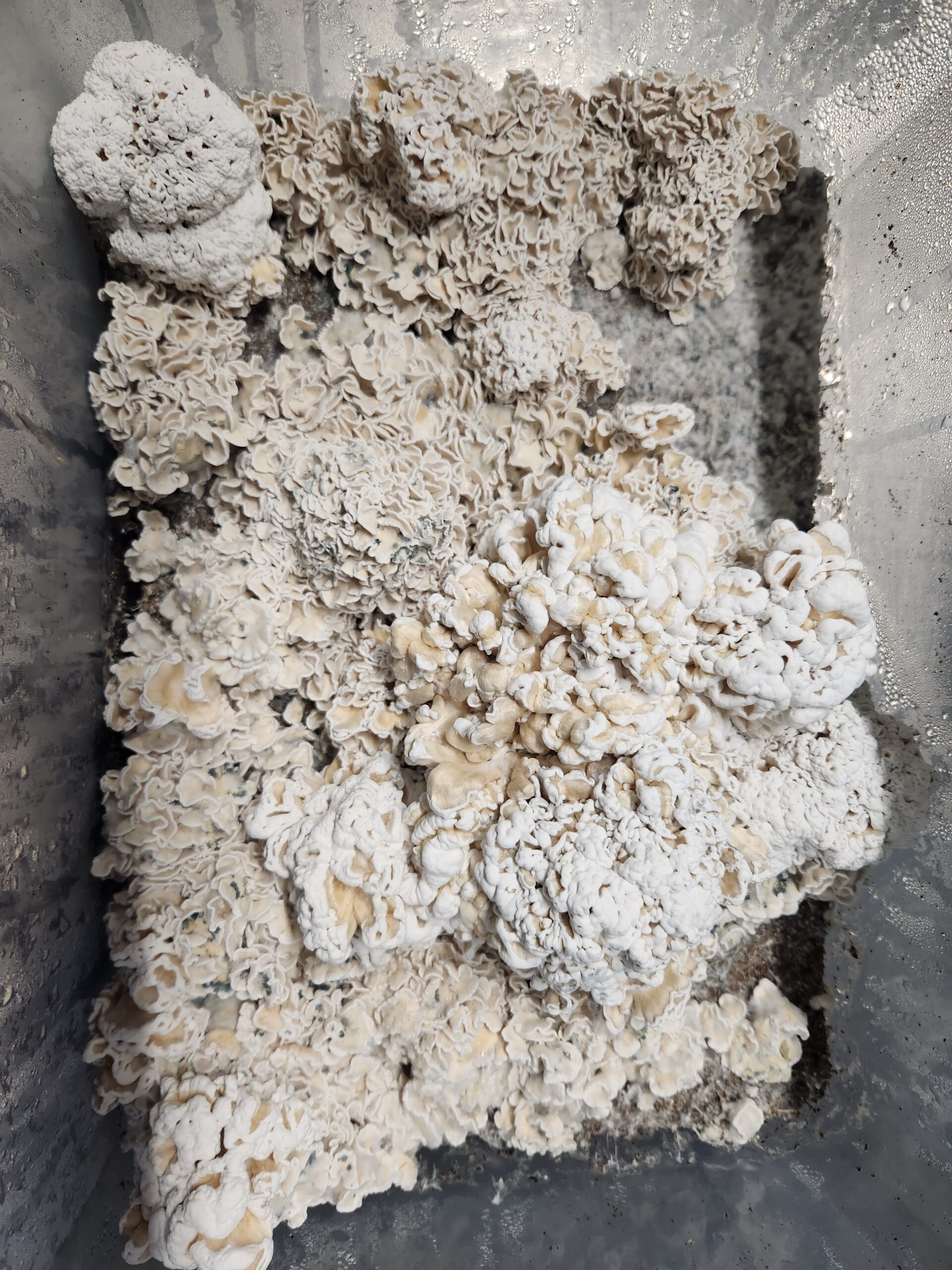
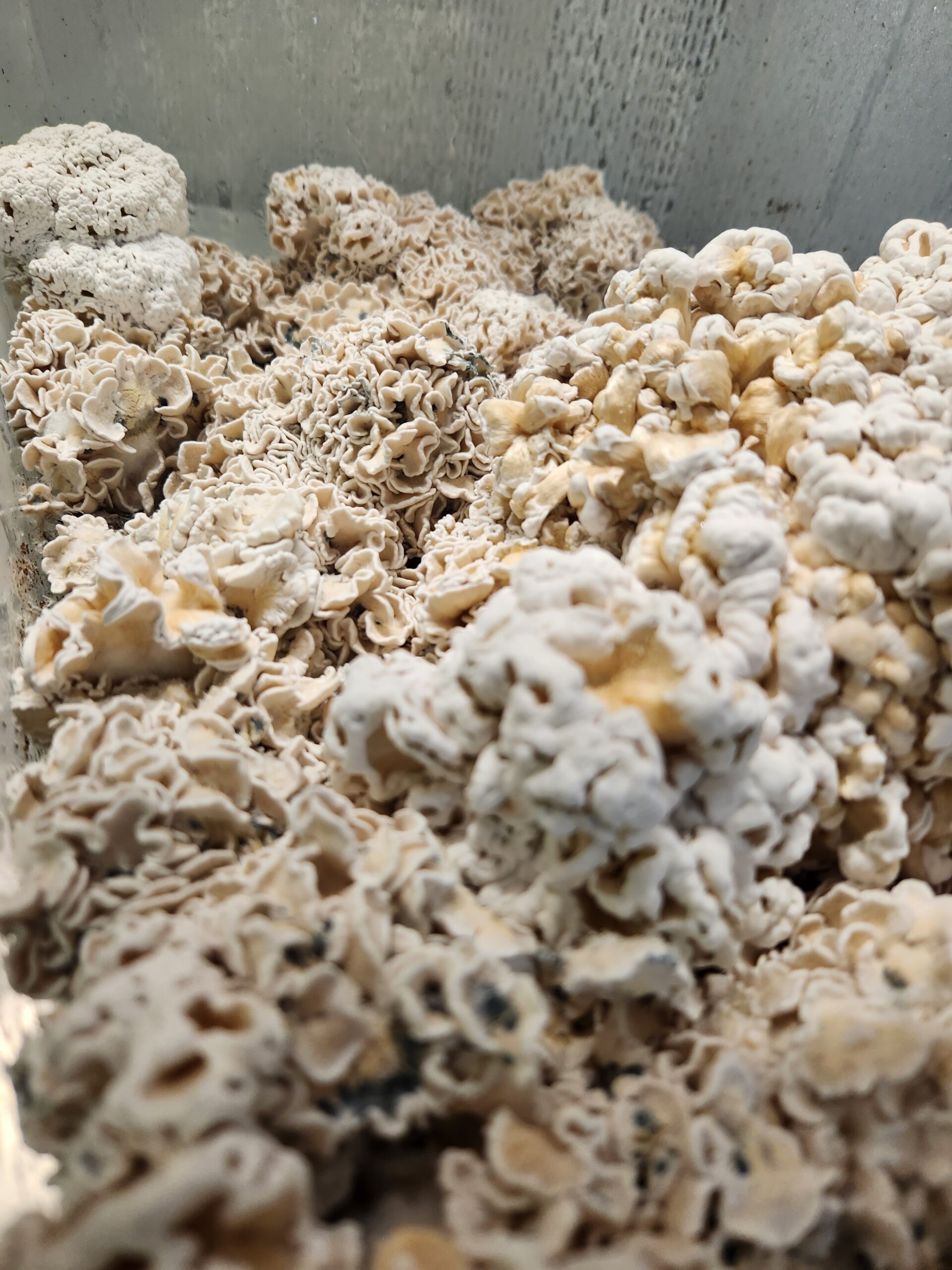
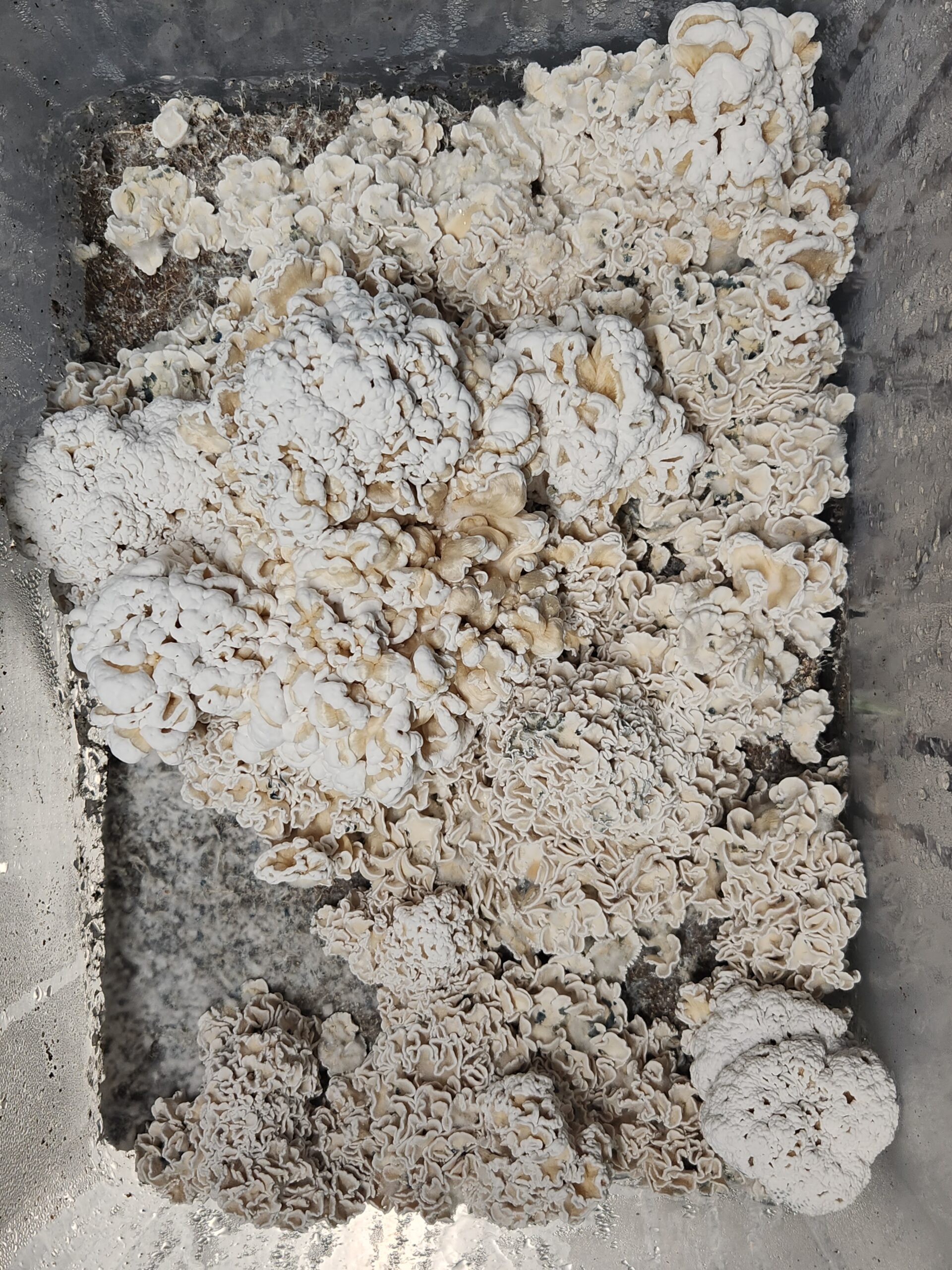
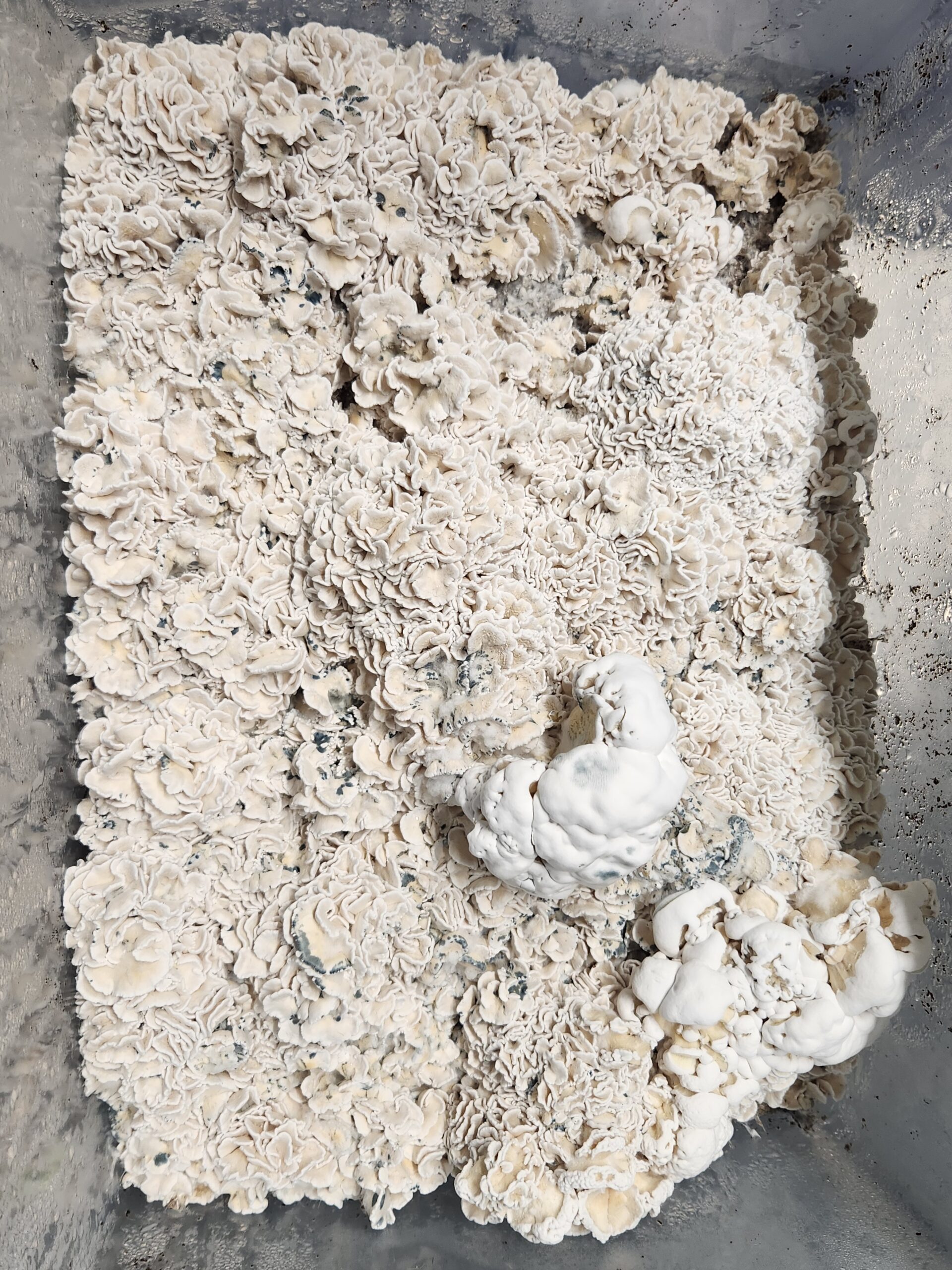
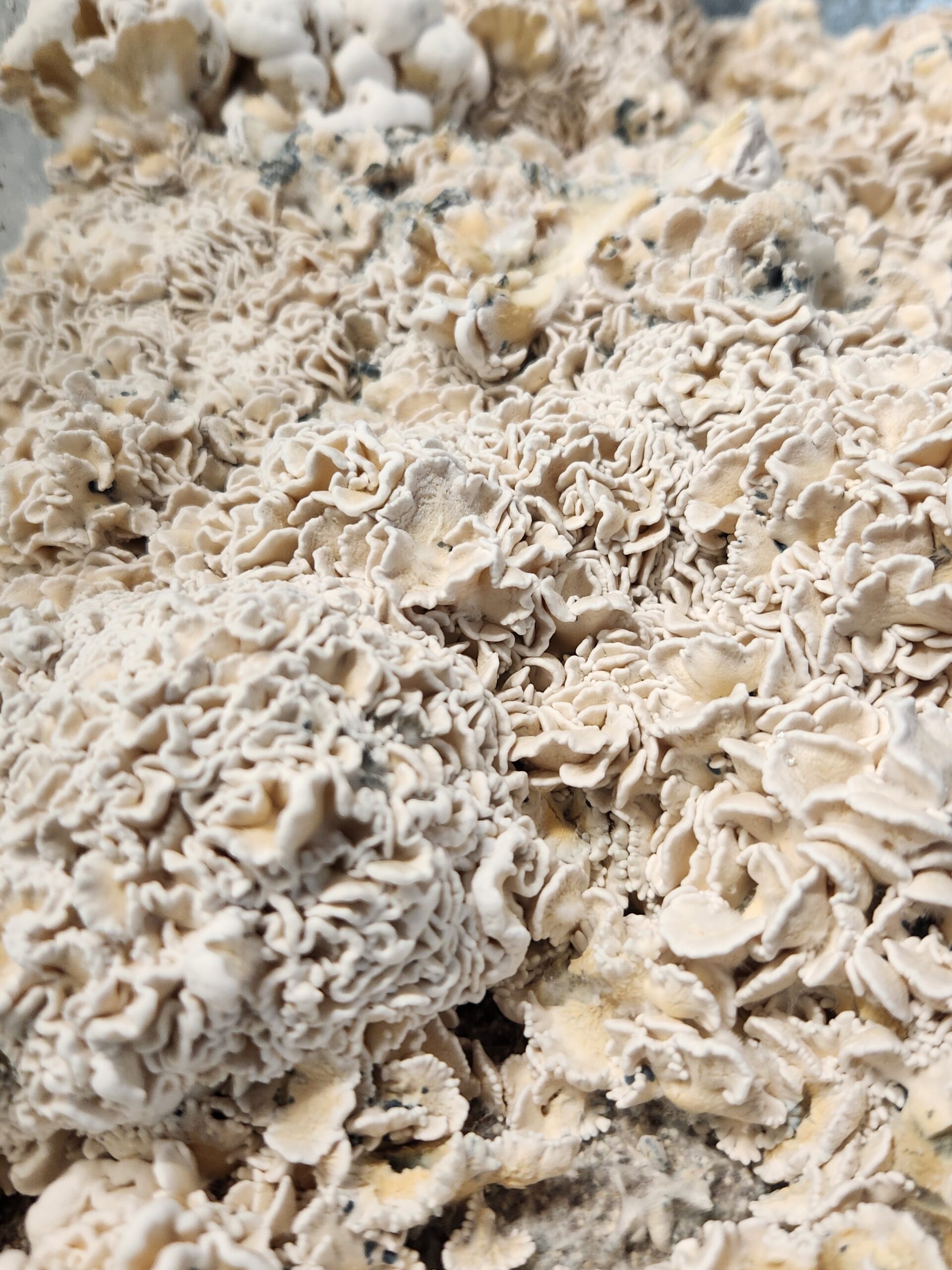
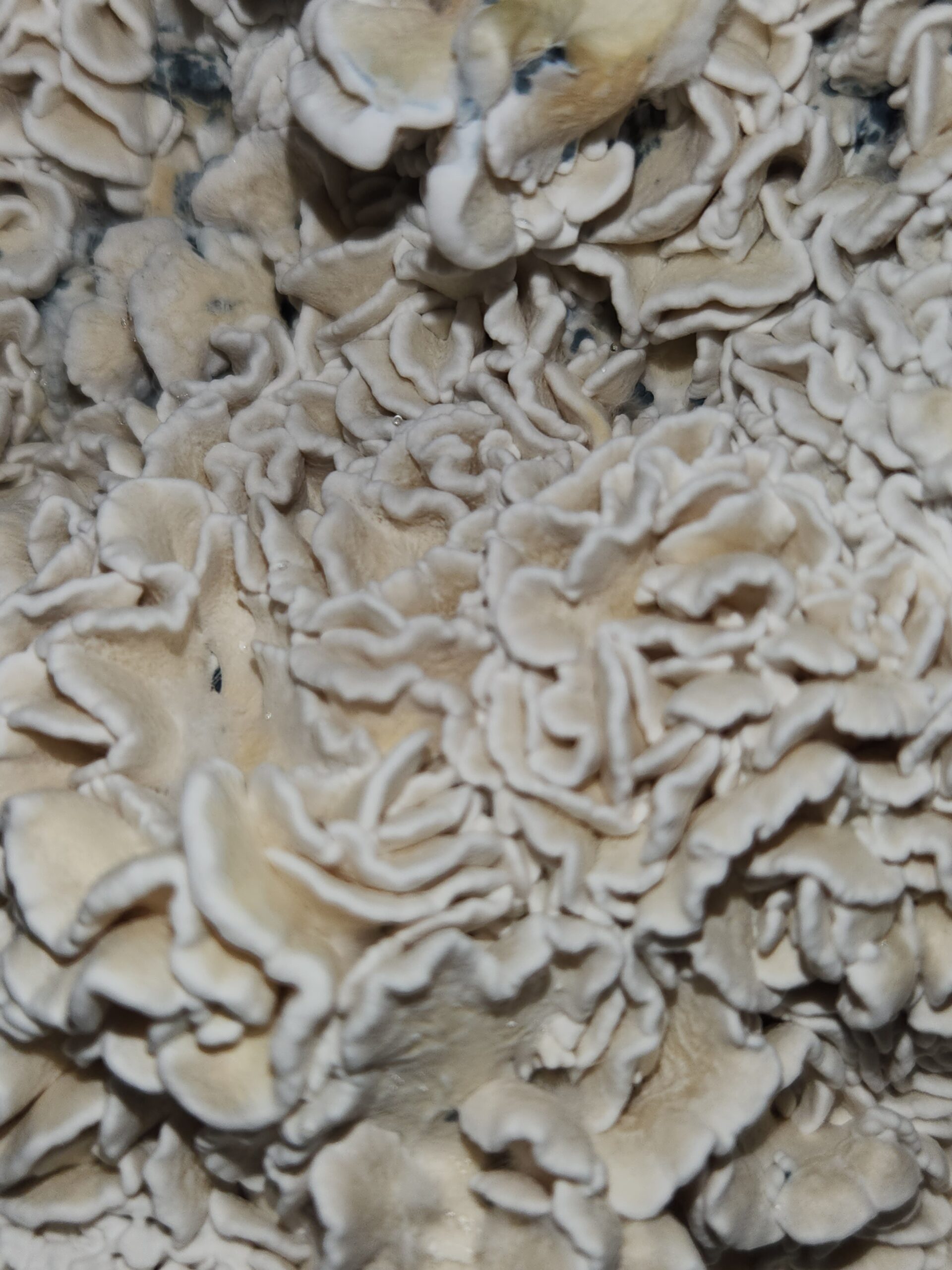
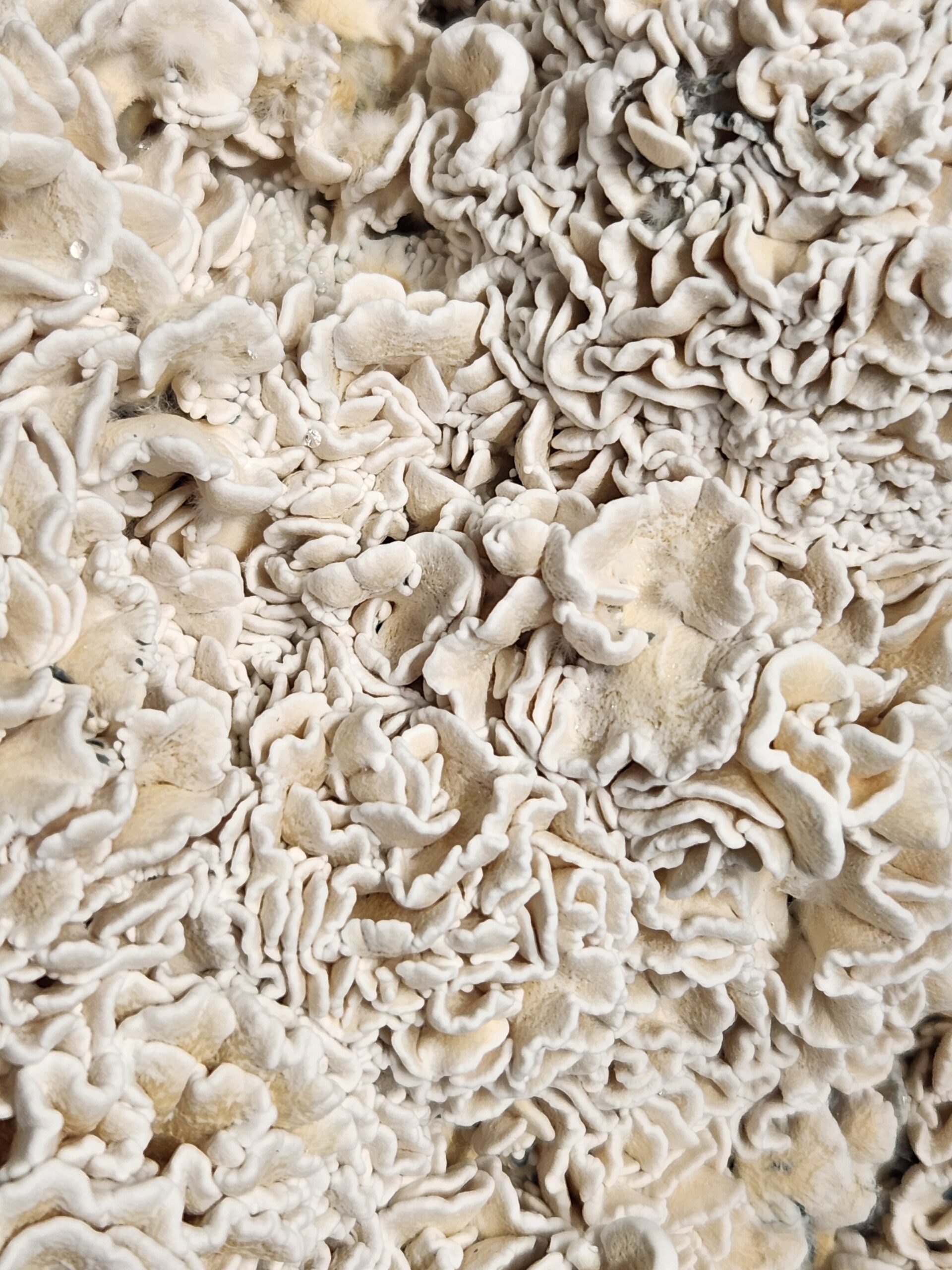
Enigma is one of the most unusual and recognizable expressions documented within Psilocybe cubensis. Instead of producing classic cap-and-stem mushrooms, Enigma commonly forms dense, undulating masses of tissue—often described as “brain-like,” “coral,” or “finning” growth. In modern mycology circles it’s frequently discussed as the stabilized mutation associated with the Tidal Wave lineage (often referenced as TW2), and it is widely reported to be non-sporulating—meaning it generally does not produce a typical spore print and is preserved through living culture lines.
Genetic Lineage & Historical Context
- Species: Psilocybe cubensis
- Lineage context: Commonly linked to Tidal Wave (often summarized as a Penis Envy × B+ hybrid) with the TW2 isolate frequently referenced in Enigma’s origin story
- Also known as: TW2, Tidal Wave 2, the blob mutation, and simply Enigma cubensis
- Mutation status: Atypical “blob/finning” phenotype rather than standard fruit bodies
- Preservation: Maintained through tissue-derived culture in community circulation due to lack of spores
Because Enigma is widely described as sporeless, it is typically maintained through tissue-derived culture rather than traditional spore work—making provenance, clean handling, and stable culture maintenance central to its research value.
Visual Characteristics (Macro Morphology)
- Overall form: Dense, fused masses; frequently “brain coral,” “cauliflower,” or “truffle-like” appearance
- Development pattern: Fin-like ridges/folds (“finning”) instead of distinct caps and stems
- Coloration: Often pale cream to off-white when young; can develop warmer beige tones with maturity
- Bruising: Blue oxidation upon handling or damage is commonly reported
- Sporulation: Commonly reported to not drop spores (or to do so extremely rarely)
Microscopy & Taxonomy Notes
- Taxonomy: Still categorized as P. cubensis despite highly atypical morphology
- Spore print color: Often not applicable for Enigma due to non-sporulating phenotype
- What’s interesting under the scope: Hyphal architecture, tissue organization, and mutation-associated developmental patterns that diverge from classic cubensis fruit-body formation
- Why it’s studied: A clear, memorable example of how dramatically phenotype can shift while remaining within a single species classification
Research Notes (Educational Context)
Educational and descriptive context only.
- Potency (reported): Frequently discussed as very high in community reports relative to typical cubensis lines
- Analytical relevance: Often referenced in the context of unusually high “total tryptamine” results in community testing events (e.g., Psilocybin Cup-style reporting) and informal comparative profiling
- Why that matters: Enigma is commonly cited when discussing variability in alkaloid profiles across cubensis genetics and the relationship between phenotype, development time, and chemical expression
Cultivation Characteristics (High-Level Overview)
- Difficulty: Often described as advanced / patience-intensive due to atypical development
- Growth behavior: Frequently reported to mature more slowly and differently than standard cubensis fruiting bodies
- Key distinction: Culture-only preservation is commonly emphasized because sporulation is absent or extremely limited
For safety and compliance, this section is descriptive only and excludes instructions, parameters, or cultivation techniques.
Collector & Researcher Highlights
- Signature phenotype: Iconic “brain/coral” blob morphology that’s immediately recognizable
- Culture-only appeal: A standout genetic in libraries because it’s maintained through clean, living culture work
- Common references: Often discussed alongside TW2 and sometimes labeled “OMNI” in vendor catalogs
Why liquid culture over spores (for research):
- Sporeless phenotype: Enigma is widely described as non-sporulating, making live culture the practical format for study
- Cleaner observation: minimal extraneous material for microscopy prep – Made in front of a scanned, 99.99% efficient HEPA filter
- Established culture line: supports repeatable comparative observation across time
- Shelf Life: 9-12 Months (Refrigerated DO NOT FREEZE)
Shipping: Fast and Free USPS shipping including all territories including Puerto Rico, U.S. Virgin Islands, Guam, Northern Mariana Islands, and American Samoa. Expedited USPS Priority options available. Products shipped daily (see our Shipping FAQ page for shipping times and questions) No cheap culture and outrageous shipping cost. What you see is what you pay.
- Satisfaction guarantee on all orders
- Military & First Responder discount available
- Shroomery verified & trusted vendor with over 50,000+ cultures shipped
- See what our customers say about us!
- All payment methods are accepted, including cash, money order, debit, credit, cryptocurrency at checkout, CashApp, and Venmo.
Important: Products are strictly intended for microscopy and taxonomy research only. Do not use where prohibited by law. None of our products contain any illegal or active alkaloids at the time of shipment.
Add Enigma to your genetic library and explore the lineage that defined modern P. cubensis research.
Enigma’s Parent Lines We Carry
Enigma does not stand alone. It is a mutation that surfaced inside the Tidal Wave line, which is itself widely described as a Penis Envy x B+ cross. If you are documenting where the blob came from, these are the lines behind it:
- Tidal Wave – the immediate parent line, and the isolate referenced as TW2 in Enigma’s origin story
- Penis Envy (PE) – the thick-stemmed, reduced-sporulation line on one side of the Tidal Wave cross
- B+ (B Positive) – the broad-capped, forgiving classic on the other side of that cross
- Melmac – the original Homestead PE isolation, useful for tracing the PE side further back
Collecting the family? Add the matching Enigma vinyl sticker – and every order includes a free random sticker regardless.
Frequently Asked Questions
Why does Enigma not produce spores?
Enigma is an atypical “blob” mutation and is widely reported to be non-sporulating — it generally does not drop a spore print at all. It is therefore maintained through tissue-derived living culture rather than spore work, which makes culture the only practical format for studying it.
Why does Enigma not look like a mushroom?
Instead of forming caps and stems, Enigma develops dense, fused masses of tissue with fin-like ridges and folds, often described as “brain coral” or “cauliflower.” It is still classified as Psilocybe cubensis despite the dramatic difference in form.
What is the difference between a liquid culture and a spore syringe?
A spore syringe carries spores suspended in solution. Spores are genetically varied and have to germinate before any mycelium exists, so what develops can differ from sample to sample. A liquid culture contains living mycelium from a single isolated genetic line that has already been grown out, so you are working with a known, consistent expression from the start and there is no germination stage. For microscopy and taxonomy work that means repeatable observation of the same genetics rather than a mixed population. Every culture we prepare is made in front of a scanned, 99.99% efficient HEPA filter.
How long will my liquid culture stay viable, and how should I store it?
We recommend using your culture within 3 months of receipt for best results. Stored correctly it will remain viable for up to 12 months without issue. Keep it refrigerated between 33-40°F and never allow it to freeze. Most cultures survive a single freeze-thaw cycle, but repeated freeze-thaw cycles will kill live mycelium.
What happens if my culture arrives contaminated or does not work?
Every batch is verified contamination-free before it ships, and your order is covered by our 70-Day Guarantee. If a culture arrives contaminated or fails to perform within that window, contact us and we will arrange a replacement or refund. Full terms are set out on our Refund & Replacement Policy page.
What is the difference between Enigma and Tidal Wave?
Tidal Wave is a conventional cap-and-stem cubensis line. Enigma is the mutation that appeared within that lineage and never returns to normal fruit-body form, growing instead as dense folded tissue. Tidal Wave produces spores and can be worked from a spore print. Enigma does not, which is why it exists only as living culture.
Where did Enigma come from?
The line is generally traced to 2018, when a syringe reported to carry Tidal Wave and Penis Envy genetics produced an unexpected coral-like growth instead of mushrooms. The mutation was preserved on plates and distributed through the mycology community rather than being bred in any conventional sense. Accounts of who found it first still differ, and we set them out in the section below.
Is Enigma the same thing as sclerotia or truffles?
Not quite, though the comparison comes up often. The blob tissue has been described as sclerotia-like material forming at the surface rather than staying below the substrate as true sclerotia do. The visual similarity is real, but Enigma is a developmental anomaly of the fruiting body rather than a truffle-forming species.
Have a question we have not covered here? See our full FAQ page.
Additional Information & Research Resources
Documented Origin & Disputed History
Enigma is a recent arrival with a contested paper trail. The account most often repeated dates it to 2018, when a syringe sold as a Tidal Wave and Penis Envy blend produced something that looked like nothing else in the species: a coral-like mass with no caps and no stems. Images circulated quickly, and so did arguments over who had found it and what it should be called. The vendor behind that syringe went on to promote the material as Tidal Wave 2, the TW2 designation still attached to Enigma today.
What kept the mutation alive was ordinary community preservation rather than any breeding program. Plates of the tissue were passed between growers, and in 2019 a mycology group released several hundred isolated plates at minimal cost specifically so the line would not be lost. Because Enigma cannot reproduce on its own, every Enigma culture in existence traces back to that preserved tissue. Details of who first isolated it remain disputed, and we present the account as it circulates rather than treating it as settled.
The Genetics Behind the Blob
The most useful framing comes from Ian Bollinger of Hyphae Labs, who has described Enigma as a body type rather than a cultivar – a morphology, not a strain in the ordinary sense. On his account the earliest Enigmas were induced by forcing two mating types that would not normally pair to do so, producing a dikaryon that colonizes readily but cannot complete normal fruit-body development. Reggie Harris of Oakland Hyphae has described the visible blob as sclerotia-like tissue forming at the surface, where in most cubensis lines such material would stay below the substrate.
In plain language: Enigma is what happens when the machinery that builds a cap, gills and spores fails, while the machinery that builds tissue keeps running. The result is stable across transfers, which is unusual for a mutation and is the reason it can be kept as a working culture line at all.
Why Enigma Produces No Spores
No cap and no gills means no hymenophore, and no hymenophore means no basidia and no spores. Enigma is functionally sterile. It cannot be preserved as a print, cannot be traded as a spore syringe, and cannot be crossed with anything. The comparison often drawn is to a mule: viable, vigorous, and a genetic dead end. Propagation is by tissue and living culture only, which is why liquid culture is not merely the convenient format for Enigma but the only one.
Microscopy & Culture Reference Notes
- Spore data: none. Unlike sporulating cubensis lines there are no spores to measure, no germ pore to resolve and no print to prepare
- What is observable: vegetative structure – septate hyphae, branching habit, and the clamp connections characteristic of a dikaryotic basidiomycete
- Tissue character: the blob reads as densely knotted hyphal tissue rather than organised gill structure, which is the observation that separates it from every cap-and-stem line
- Suggested workflow: 100x to survey growth habit, 400x for hyphal morphology and branching, 1000x oil immersion for clamp connections and septa
- Comparative value: run alongside a sporulating line such as Tidal Wave to document how far development diverges within one species
Enigma on Video
Background viewing from third-party creators. Enigma-specific coverage first, then context on the lines it came from:
- Enigma Mushrooms: What Are They? – DoubleBlind, 9 min. The best general introduction to the mutation, covering the blob morphology, the sterility, and why it behaves unlike anything else in the species.
- The Enigma Mutation: Cultivating Alien Fungi – Wonder Fungi, 7 min. A focused look at what makes the mutation biologically unusual and how it is kept alive through culture work.
- Enigma Supreme: The Rare Psilocybin Strain – IMicrodosing, 1 min. A short visual of the coral-like growth habit, useful if you have only seen photographs.
- Enigma Psilocybin Mushroom – IMicrodosing, 1 min. Another brief clip showing the finning tissue structure up close.
- Tidal Wave Mushrooms: The Best New Cubensis Strain? – Psilocin Valley, 2 min. An overview of the parent line, and a clear picture of the normal morphology Enigma departs from.
- The Wild Science Behind Mushroom Strains – North Spore, 9 min. Covers B+ and Penis Envy, the two lines standing behind Tidal Wave, and what strain designations actually mean.
- The Strongest Psychedelic Mushrooms Explained – Inner Thought Chronicles, 11 min. Useful context on where Enigma sits in the wider conversation about cubensis genetics.
These are third-party videos. We are not affiliated with any of these creators and do not control their content. Links are provided for historical and educational context only.
Important Notice:
Once home, cubensis cultures should be kept in a fridge between 33-40°F to maximize their lifespan of 6-12 months.
Do not let your cultures freeze! While most will survive one freeze-thaw cycle, multiple freeze-thaw cycles will kill any live mycelium.
This product description is provided strictly for educational, historical, and scientific context. Products are intended for microscopy and taxonomy research only. Not for cultivation or consumption.
We are not able to offer any cultivation or growing information or advice. Any such requests will be ignored.
Please comply with all applicable local, state, and federal laws.


Charles L. (verified owner) –
Jessica Griffin (verified owner) –
Excellent as always. I was a little worried because shipping took longer than expected which has nothing to do with you culture and everything to do with the weather, but it showed up in perfect condition and everything looks good under the microscope.
Michael H. (verified owner) –
Fast shipping top tier packaging
Anonymous (verified owner) –
David B. (verified owner) –
Anthony B. (verified owner) –
These cultures look beautiful and am very excited for the research they will bring. I had an Email issue when these were shipped but the team got back to me right away and helped me out. My go to place for LCs 😊
Anonymous (verified owner) –
Anonymous (verified owner) –
Seems to be coming along very nicely.
Ryan (verified owner) –
Loved how it was 3 10cc vs 1 30cc. Perfectly healthy and abundant culture. Thank you 🙏