

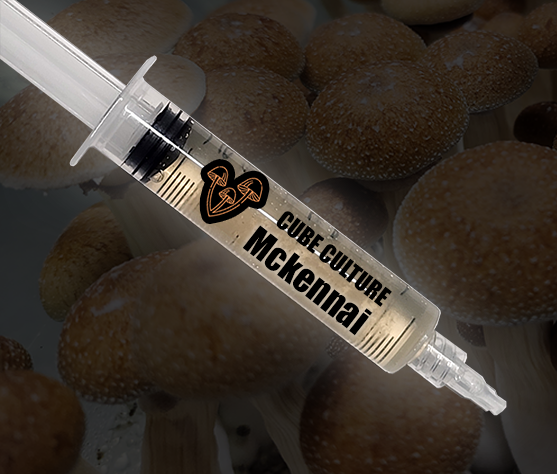
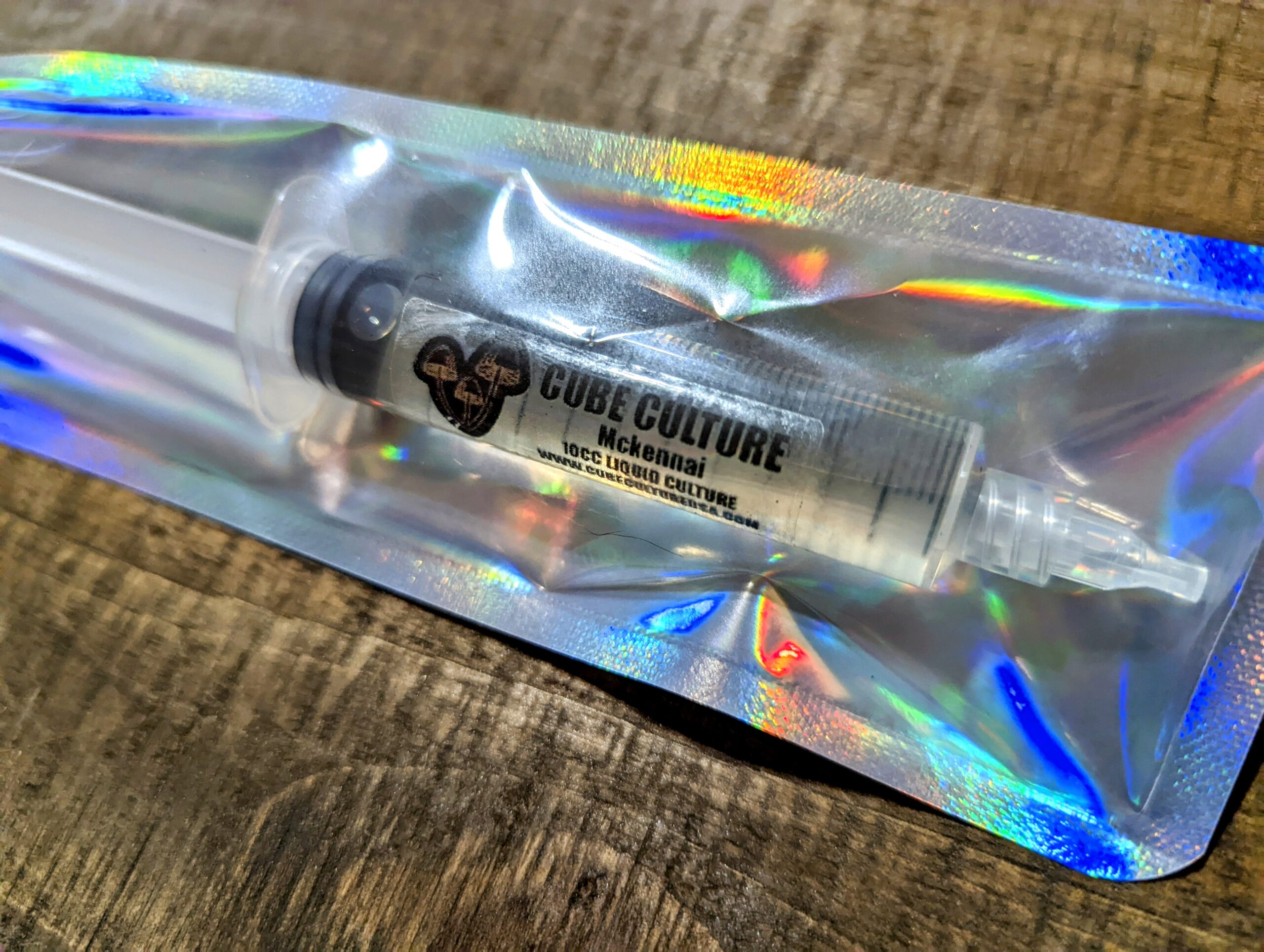

McKennaii | Potent P. cubensis Research Genetics
A legendary European cultivar named for Terence McKenna.
McKennaii (sometimes spelled “McKennaii” and occasionally referred to informally as “McKenna”) is a widely circulated Psilocybe cubensis cultivar known in modern mycology culture for bold, classic cubensis morphology and a strong community reputation. In microscopy and taxonomy work, it’s valued for readily comparable traits—cap/stipe proportions, veil remnants, bruising response, and characteristic spore coloration.
Genetic Lineage & Historical Context
- Species: Psilocybe cubensis
- Lineage status: Classic cubensis cultivar (commercially circulated; widely distributed in Europe)
- Name origin: Named in honor of writer/researcher Terence McKenna
- Provenance note: Like many cubensis “strain” names, the exact origin story is largely informal; the name is most strongly associated with European circulation (often via Dutch/EU markets).
In taxonomy and comparative observation, “strain” names like McKennaii usually describe a stabilized phenotype within P. cubensis, not a formally described botanical variety.
Visual Characteristics (Macro Morphology)
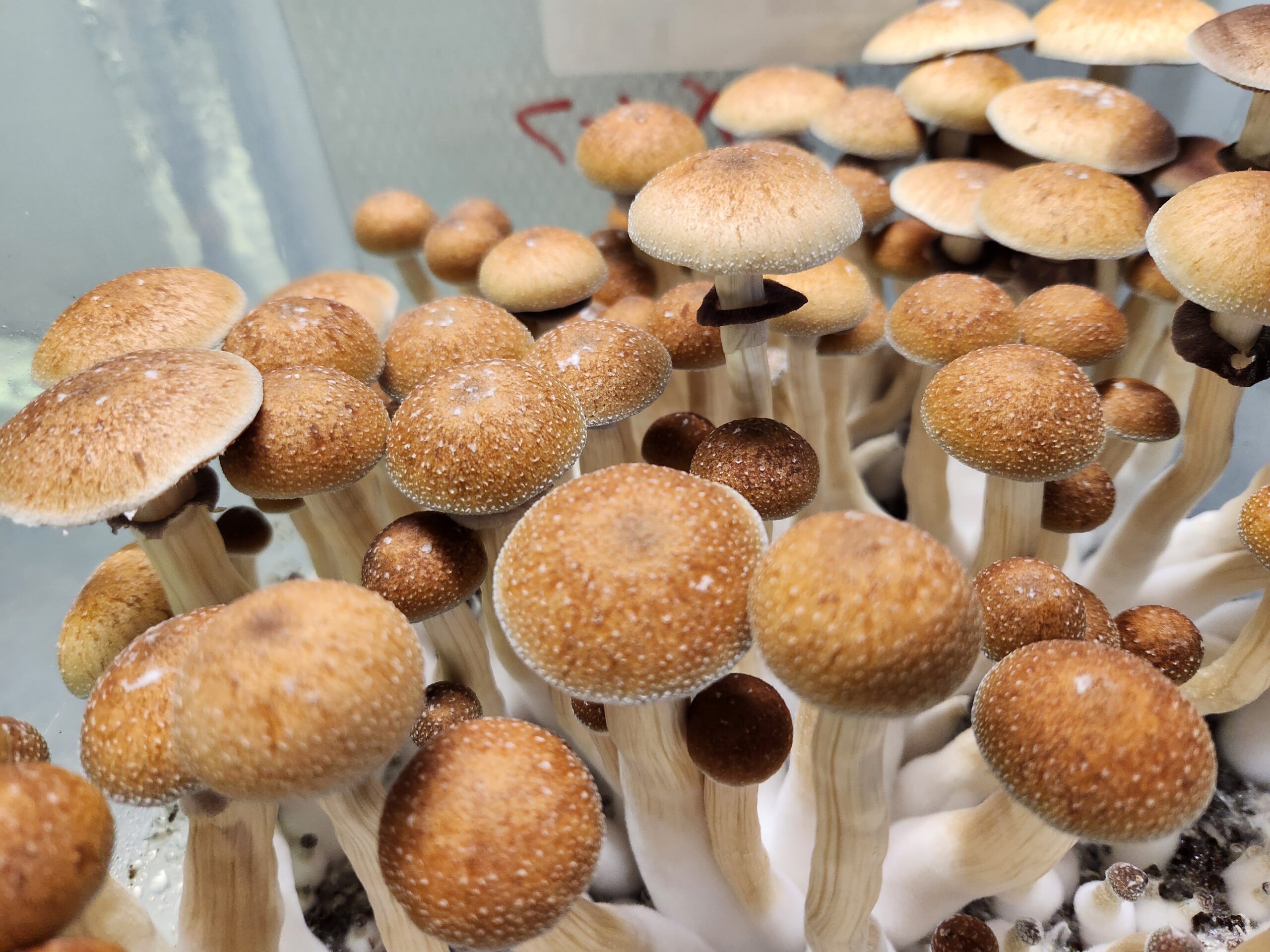
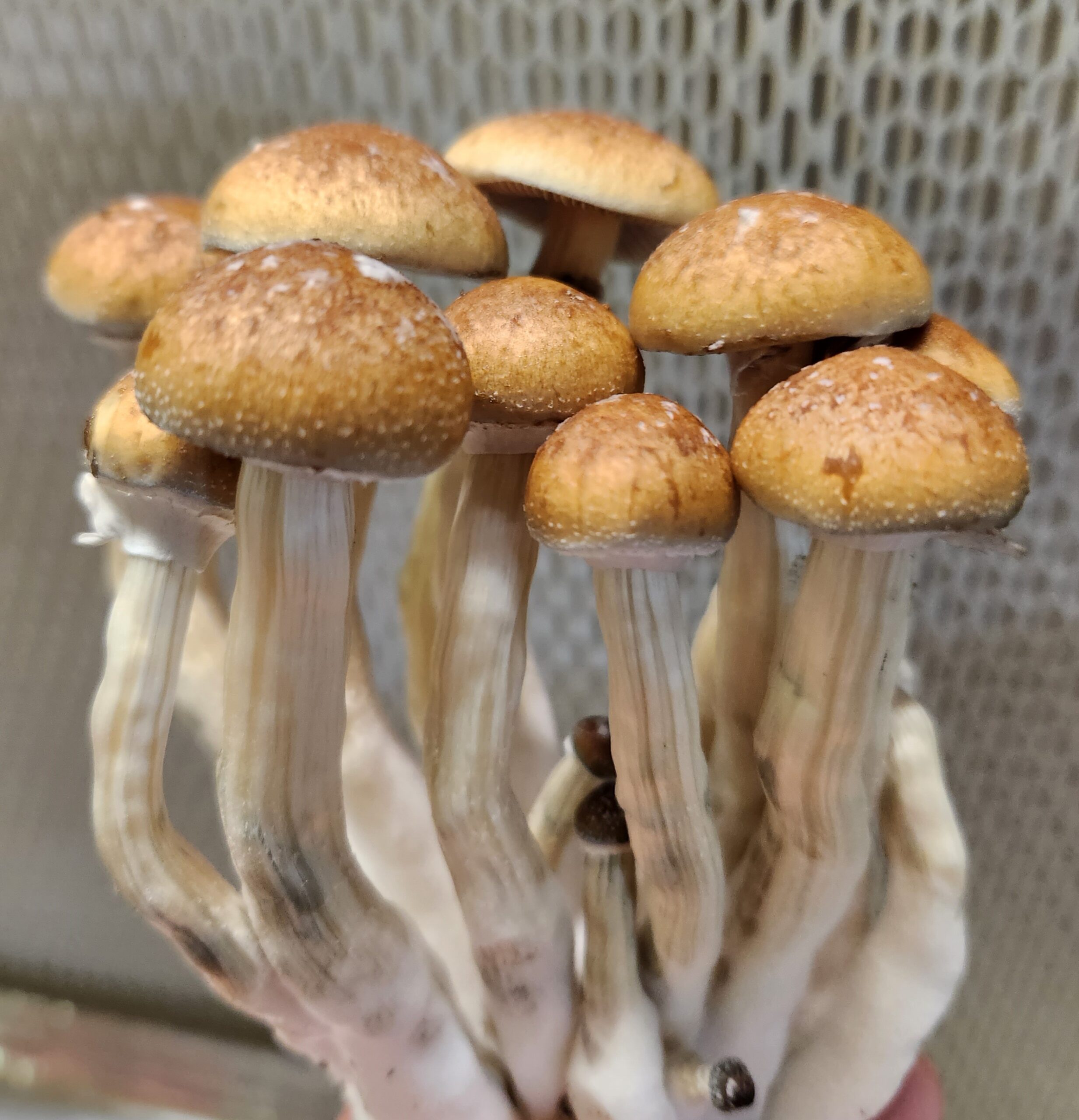
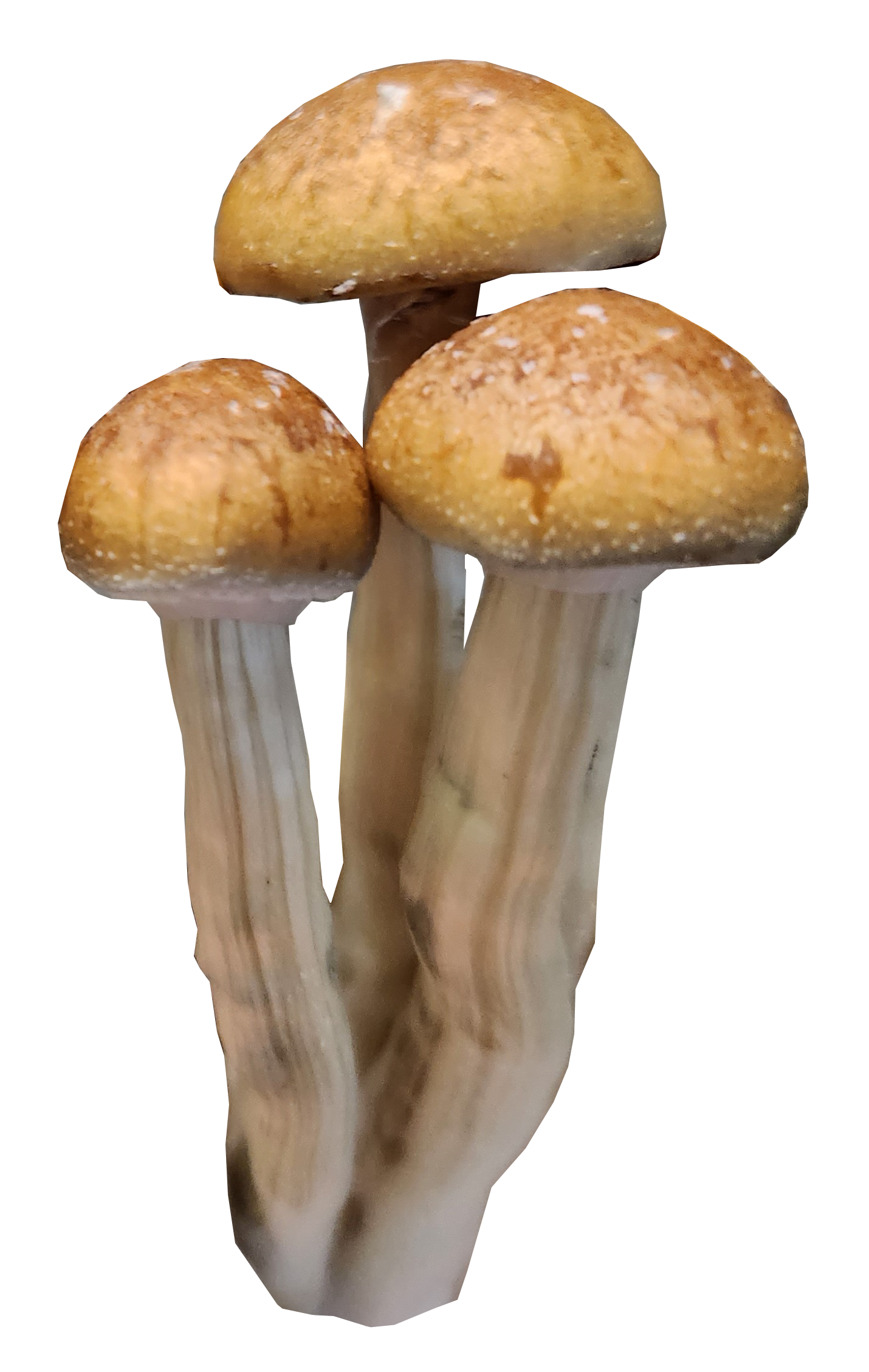
- Cap coloration: Caramel to chestnut-brown when young, often lightening as it matures (typical cubensis hygrophanous behavior)
- Cap shape: Convex to broadly convex/flattening with maturity; may show a subtle central bump (umbo) in some expressions
- Stem: Creamy white to off-white, commonly described as thick and sturdy for a cubensis phenotype
- Veil remnants: Partial veil often leaves a persistent annular ring on the stipe (common in P. cubensis)
- Bruising: Blue staining upon handling or damage (oxidation response typical of psilocybin-containing species)
Microscopy & Taxonomy Notes
- Spore print color: Dark purplish-brown (typical of P. cubensis)
- Gill structure: Crowded gills with adnate to adnexed attachment (typical cubensis morphology)
- Why McKennaii is favored: Consistent, “textbook cubensis” traits paired with a strong catalog history make it useful for comparative work and identification practice.
Species Baseline ( P. cubensis Reference)
- Ecology: Saprotrophic; commonly found in subtropical/tropical regions, often associated with herbivore dung and enriched pasture soils
- Core morphology: Sticky/smooth cap that can fade toward yellowish-brown with age; well-developed partial veil that can leave a persistent ring; blue staining when bruised
- Spore print: Purple to dark purplish-brown
- Spore size (reported): Approximately 11.5–17.3 × 8–11.5 μm (species reference range)
These are species-level reference traits; individual cultivars (including McKennaii) may present with different cap colors, stature, and phenotypic expression depending on genetics and environment.
Research Notes (Educational Context)
Educational and descriptive context only.
- Alkaloids (species-level): P. cubensis is widely documented to contain psilocybin and psilocin; reported concentrations vary substantially across samples and studies.
- Potency (reported for McKennaii): Commonly described in community and catalog literature as “high” relative to many standard cubensis lines, often paired with strong visual and introspective descriptors.
- Common descriptive language (anecdotal): “Philosophical,” “deeply introspective,” and “visual” are recurring descriptors associated with McKennaii in published strain write-ups.
- Analytical relevance: Because cultivar names don’t guarantee chemistry, McKennaii is best treated as a comparative phenotype within P. cubensis unless supported by lab testing.
Cultivation Characteristics (High-Level Overview)
- Difficulty (reported): Generally described as a solid, stable cubensis cultivar
- Growth behavior (reported): Often characterized as vigorous and reliable
- Environmental tolerance: Typical cubensis resilience reported across varied conditions
For safety and compliance, this section is descriptive only and excludes instructions, parameters, or cultivation techniques.
Collector & Researcher Highlights
- Iconic namesake: Linked to Terence McKenna’s cultural influence on modern ethnomycology
- European staple: Widely circulated in EU/Dutch strain catalogs
- Abbreviation: Commonly referred to as McK or McKennaii
Why liquid culture over spores (for research):
- Established genetics: derived from a stable, well-documented lineage
- Cleaner observation: minimal extraneous material for microscopy prep – Made in front of a scanned, 99.99% efficient HEPA filter
- Reliable morphology: ideal for repeated comparative study
- Shelf Life: Use within 2 months for best results; 70-day viability guarantee when stored properly; may remain viable up to 12 months refrigerated (not guaranteed). DO NOT FREEZE.
Shipping: Fast and Free USPS shipping including all territories including Puerto Rico, U.S. Virgin Islands, Guam, Northern Mariana Islands, and American Samoa. Expedited USPS Priority options available. Products shipped daily (see our Shipping FAQ page for shipping times and questions) No cheap culture and outrageous shipping cost. What you see is what you pay.
- Satisfaction guarantee on all orders
- Military & First Responder discount available
- Shroomery verified & trusted vendor with 100,000+ cultures shipped
- See what our customers say about us!
- All payment methods are accepted, including cash, money order, debit, credit, cryptocurrency at checkout, Cash App, and Venmo.
Important: Products are strictly intended for microscopy and taxonomy research only. Do not use where prohibited by law. None of our products contain any illegal or active alkaloids at the time of shipment.
Add McKennaii to your genetic library and explore the lineage that defined modern P. cubensis research.
Classic & Companion Lines We Carry
McKennaii is one of the handful of cultivars named directly in published genome research. These are the lines it is most often grouped and compared with:
- Penis Envy (PE) – the line traced to Amazonian spores associated with Terence McKenna himself
- Golden Teacher – the species reference baseline, named alongside McKennaii in the 2023 genome study
- B+ (B Positive) – another classic from that same list of best-known commercial cultivars
- Treasure Coast (TC) – a Florida classic also named in the study, useful for comparing a European and an American line
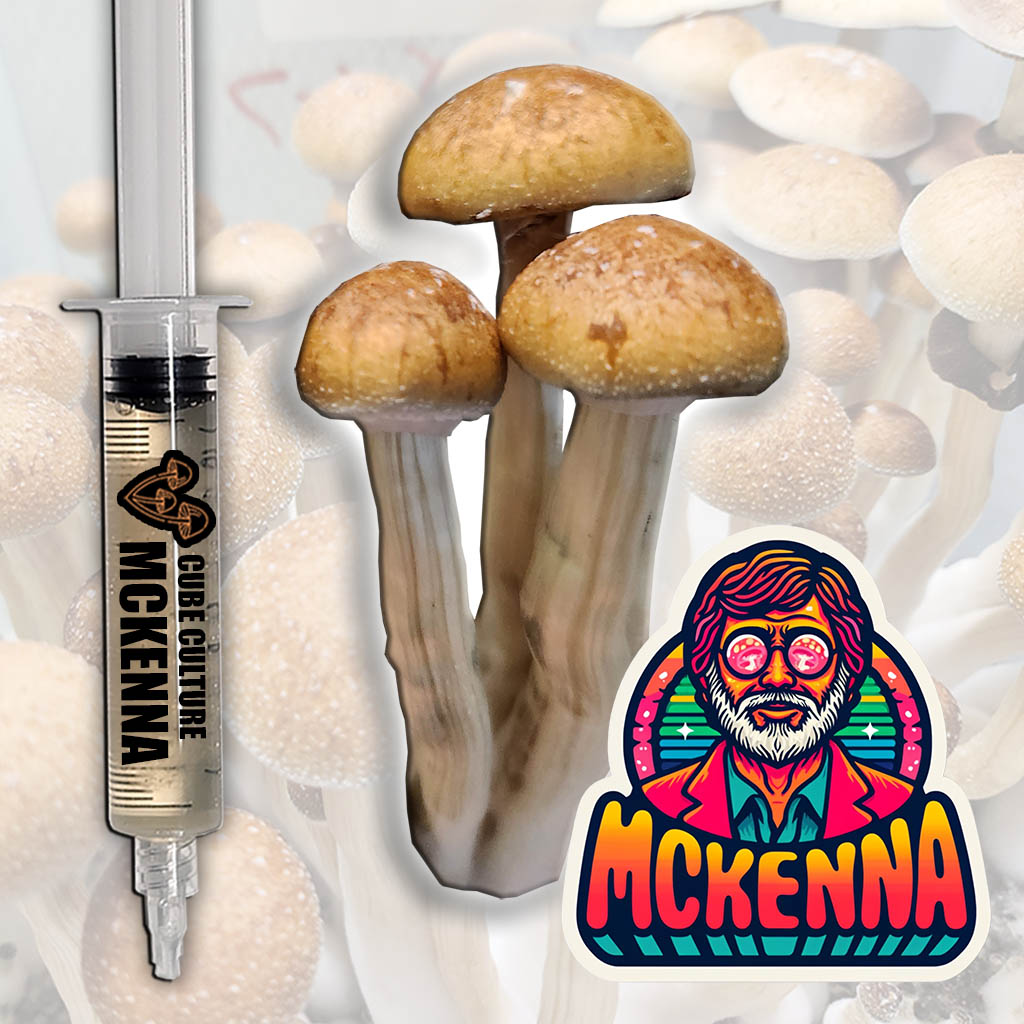
Collecting the family? Add the matching McKennaii vinyl sticker – and every order includes a free random sticker regardless.
Frequently Asked Questions
Who is McKennaii named after?
The line is named in honor of writer and researcher Terence McKenna. The name is most strongly associated with European circulation, particularly through Dutch and EU catalogs.
Is McKennaii a formally described botanical variety?
No. Like most cubensis strain names, McKennaii describes a stabilized phenotype within Psilocybe cubensis rather than a formally described botanical variety. That distinction matters when recording it in taxonomy work.
What is the difference between a liquid culture and a spore syringe?
A spore syringe carries spores suspended in solution. Spores are genetically varied and have to germinate before any mycelium exists, so what develops can differ from sample to sample. A liquid culture contains living mycelium from a single isolated genetic line that has already been grown out, so you are working with a known, consistent expression from the start and there is no germination stage. For microscopy and taxonomy work that means repeatable observation of the same genetics rather than a mixed population. Every culture we prepare is made in front of a scanned, 99.99% efficient HEPA filter.
How long will my liquid culture stay viable, and how should I store it?
We recommend using your culture within 2 months of receipt for best results. When stored properly it is covered by our 70-day viability guarantee, and properly stored cultures can remain viable for up to 12 months, although viability beyond 70 days is not guaranteed. Keep it refrigerated between 33-40°F and never allow it to freeze. Most cultures survive a single freeze-thaw cycle, but repeated freeze-thaw cycles will kill live mycelium.
What happens if my culture arrives contaminated or does not work?
Every batch is verified contamination-free before it ships, and your order is covered by our 70-Day Guarantee. If a culture arrives contaminated or fails to perform within that window, contact us and we will arrange a replacement or refund. Full terms are set out on our Refund & Replacement Policy page.
When and where did McKennaii appear?
McKennaii is generally traced to the Netherlands, where it appeared in Dutch smart shops shortly after Terence McKenna’s death in April 2000. It is credited to an unnamed Dutch cultivator who named it as a tribute. A popular story holds that it was started from spore prints found among McKenna’s belongings, but no evidence supports that account.
Did Terence McKenna have anything to do with the strain?
Not directly, as far as anyone can show. McKenna was one of the best-known advocates of psilocybin mushrooms, and in 1976 he and his brother Dennis published one of the first home cultivation guides for P. cubensis under pseudonyms. The Penis Envy line is also traced to Amazonian material associated with him. McKennaii, however, appeared after his death and carries his name as an honor rather than as a record of his involvement.
What do McKennaii spores look like under the microscope?
Typical of the species: smooth, subellipsoid, dark purple-brown in transmitted light, with a truncate germ pore, and roughly 11 to 17 micrometers long by 7 to 12 wide. McKennaii opens and prints like a classic cubensis, making it a straightforward specimen for measurement practice.
Have a question we have not covered here? See our full FAQ page.
Additional Information & Research Resources
Documented Origin & Disputed History
McKennaii is one of the few classic lines with a European rather than American origin. It is generally traced to the Netherlands, where it appeared in Dutch smart shops shortly after Terence McKenna died in April 2000, and it has remained a staple of European grow-kit catalogs since. It is credited to an unnamed Dutch cultivator who is said to have selected or bred it and named it as a tribute.
The name connects it to one of the most influential figures in psilocybin history. McKenna and his brother Dennis published Psilocybin: Magic Mushroom Grower’s Guide in 1976 under the pseudonyms O.T. Oss and O.N. Oeric, one of the first practical guides to cultivating P. cubensis, and the Penis Envy line is traced to Amazonian material associated with him. A popular story holds that McKennaii itself was started from spore prints found among his belongings after his death; no evidence supports it. We present the history as the community records it rather than as settled fact.
What the Peer-Reviewed Genetics Show
McKennaii is one of the few cultivars named directly in published population genomics. McTaggart and colleagues, writing in Current Biology in 2023, listed it with Golden Teacher, Penis Envy, B+ and Treasure Coast as examples of the best-known commercial cultivars, and noted that these lines anecdotally do not differ much in their effects. Their broader finding was that cultivated P. cubensis is closely related and low in genetic diversity compared with naturalized wild populations, and that most cultivar pedigrees exist in lore but have not been authenticated.
In plain language: a line that became famous on both sides of the Atlantic is still drawn from the same narrow cultivated gene pool as the American classics. That makes McKennaii a useful check on how much a strong reputation reflects genetics and how much reflects name and marketing.
What Analytical Testing Shows
There is no published controlled data on McKennaii. It is widely described as above average in potency, but that reputation comes from catalog and community reports rather than laboratory testing. For context, a 2026 peer-reviewed study in the Journal of Fungi by Sharchaton and colleagues grew 14 cubensis strains under identical conditions and found totals ranging more than 7.8-fold, from 2.62 to 20.65 mg/g, with individual fruiting bodies within one strain varying by 12.8 to 23.4 percent in psilocybin. McKennaii potency claims should be treated as unverified until specific testing exists.
Microscopy Reference Data
- Spore dimensions: within the normal P. cubensis range of roughly 11–17 x 7–12 micrometers; published McKennaii-specific measurements are not available
- Shape: subellipsoid, smooth-walled, no surface ornamentation
- Germ pore: truncate at the apical end, resolvable at 1000x oil immersion
- Pigmentation: dark purple-brown under transmitted light; prints dense and dark
- Macro reference: dark caramel to deep brown caps, often irregular or wavy; thick, sturdy white stems; strong blue bruising where handled
- Suggested workflow: 100x to confirm coverage, 400x for primary morphological observation, 1000x oil immersion for measurement and germ pore detail; run beside Golden Teacher to compare two classic baselines
McKennaii on Video
Background viewing from third-party creators. McKennaii-specific footage is scarce, so the man it is named for comes first, then the classic lines and technique:
- What’s So Great About Mushrooms? (1987) – Terence McKenna (archival talk), 1 hr 22 min. A 1987 talk by the ethnobotanist the strain is named after, useful historical context for the name.
- The True Story of the Penis Envy Mushroom – Hamilton Morris, 2 hr 45 min. A long-form 2022 interview on the Penis Envy line and its connection to McKenna’s Amazonian material.
- The Wild Science Behind Mushroom Strains – North Spore, 9 min. Explains what a strain designation does and does not mean, which matters for a line known mostly by its name.
- The 5 Most Popular Psilocybin Mushroom Strains – Third Wave, 7 min. Context on the best-known cubensis varieties that McKennaii is grouped with.
- Fungal Microscopy: How to Mount a Slide, View and Measure Spores – Oregon Mycological Society, 5 min. Not strain-specific, but the most useful video here if you are doing the measurement work yourself.
These are third-party videos. We are not affiliated with any of these creators and do not control their content. Links are provided for historical and educational context only.
Important Notice:
Once home, cubensis cultures should be kept in a fridge between 33-40°F to maximize their lifespan. We recommend using them within 2 months. Viability is guaranteed for 70 days when stored properly, and properly stored cultures can last up to 12 months, but this is not guaranteed.
Do not let your cultures freeze! While most will survive one freeze-thaw cycle, multiple freeze-thaw cycles will kill any live mycelium.
This product description is provided strictly for educational, historical, and scientific context. Products are intended for microscopy and taxonomy research only. Not for cultivation or consumption.
We are not able to offer any cultivation or growing information or advice. Any such requests will be ignored.
Please comply with all applicable local, state, and federal laws.


Otis D. –
This was DOA like the GT, not sure buy look like you guys may had a bad run or USPS killed them.
Hershell B. –
Awesome!
GEH –
This culture provided huge results on multiple occasions. Repeat customer and Cube Culture will remain as my go-to due to great products and customer service. This is the place to be if you're looking for results.
Roberto M. –
Whoa,I could see thru the spore walls into infinity.. ( within my :microscope:)
I will be coming back for more. And passing to all my friends the news about ur 10* company !!
R.P.M.
shawn h. –
These were shipped fast and look beautiful under the microscope :microscope:!
Charles B. –
Good quality, fair pricing, and fast shipping.
Charles P. –
Easy to grow, great producer.
zachary (verified owner) –
Took longer than expected. I contacted with no response. It suddenly got delivered. Looks good. Packaging and product. Even got a sticker. Once I verify it’s good I will be ordering again. And culture needle looked full. Pretty 😍.
Anonymous (verified owner) –
Such a hell ride god heavenly.
jonathan b. (verified owner) –
Anonymous (verified owner) –
Very good for the patient ones
Joseph (verified owner) –
Still early will do a review soon